I just finished reading this lovely book by Sheryl Sandberg (COO of Facebook) and literally wept buckets whilst going through her narrative of how she coped, internalised and navigated post the death of her husband. The book broached many practical topics such as how friends interact with us in moments of grief, how grief impacts our performance at work; life views; future relationships; kids, etc. I related a recent heartbreak to SS’s sudden widowhood and gleaned amazing insights and epiphanies. Here are some of the best snippets I found reading this book:
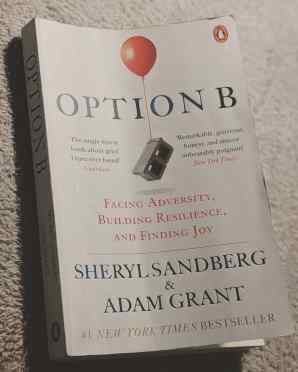
- Just weeks after losing Dave, I was talking to Phil about a father-child activity. We came up with a plan for someone to fill in for Dave. I cried to Phil, “But I want Dave.” He put his arm around me and said, “Option A is not available. So, let’s just kick the shit out of Option B.” Life is never perfect. We all live some form of Option B. And we all need to learn to kick the shit out of it.
- We plant the seeds of resilience in the ways we process negative events. After spending decades studying how people deal with setbacks, psychologist Martin Seligman found that three P’s can stunt recovery:
- Personalization – the belief that we are at fault
- Pervasiveness – the belief that an event will affect all areas of our life
- Permanence – the belief that the aftershocks of the event will last forever.
- We all deal with loss: jobs lost, loves lost, lives lost. The question is not whether these things will happen. They will, and we will have to face them. Resilience comes from deep within us and from support outside us. It comes from gratitude for what’s good in our lives and from leaning-in to the suck. It comes from analysing how we process grief and from simply accepting that grief. Sometimes we have less control than we think. Other times we have more. I learned that when life pulls you under, you can kick against the bottom, break the surface, and breathe again.
- “Some things in life cannot be fixed. They can only be carried.” – Megan Devine
Self-compassion is offering the same kindness to ourselves that we would give to a friend. It is an antidote to the cruelty we inflict on ourselves. Self-compassion can co-exist with remorse, and it often does. It does not mean shirking responsibility for our past. It’s about making sure that we don’t beat ourselves up so badly that we damage our future. Blaming our actions rather than our character allows us to feel guilt instead of shame. Although it can be hard to shake, guilt keeps us striving to improve. People become motivated to repair the wrongs of their past and make better choices in future. We are all broken by something. We have all hurt someone. Each of us is more that the worst thing we’ve ever done.
- “Life can only be understood backward but it must be lived forward.” Kierkergaard
- “When we are no longer able to change a situation we are challenged to change ourselves” Viktor Frankl
- Post traumatic growth (antonym to PTSD) takes 5 different forms:
- Finding personal strength
- Gaining appreciation
- Forming deep relationships
- Discovering meaning to life
- Seeing new possibilities
- A less Neitzchean way of putting “What doesn’t kill me makes me stronger” is Tedeschi & Calhoun’s version: “I am more vulnerable than I thought, but much stronger now that I have been (vulnerable)”.
Let me fall if I must. The one that I become will catch me.
- In prosperity our friends know us. In adversity we know our friends.
- Suffering ceases to be suffering at the moment it finds meaning.
- Tragedy does more than rip away our present; it also tears apart our hopes for our future. Accidents shatter people’s dreams of being able to support their families. Severe illnesses prevent people from finding work or love. Divorce erases future anniversaries. These profound shifts in self-perception are another secondary loss and a risk factor for depression. Our possible selves-who we hoped to become-can be collateral Although it can be extremely difficult to grasp, disappearance of one possible self can free us to imagine a new possible self. After tragedy, we sometimes miss these opportunities because we spend all of our emotional energy wishing for our old lives.
- After undergoing hardship, people have new knowledge to offer those who go through similar experiences. It is a unique source of meaning because it does not just give our lives purpose it gives our suffering purpose. People help where they’ve been hurt so that their wounds are not in vain.
A life chasing pleasure without meaning is an aimless existence. Yet a meaningful life without joy is a depressing one.
- Allowing ourselves to be happy accepting that it is okay to push through the guilt and seek joy is a triumph over permanence. Having fun is a form of self-compassion; just as we need to be kind to ourselves when we make mistakes, we also need to be kind to ourselves by enjoying life when we can. Tragedy breaks down your door and takes you prisoner. To escape takes effort and Seeking joy after facing adversity is taking back what was stolen from you. “Joy is the ultimate act of defiance.” – Bono
- Happiness is the frequency of positive experiences; not the
intensity.
- A day of joy is fifteen minutes. A day of pain is fifteen years. No one can pretend it’s easy, but the job of life is to make those fifteen minutes into fifteen years and those fifteen years into fifteen minutes.
As a cute little footnote, I thought I’d leave Sheryl and her late husband’s wedding vows. Absolutely adorable:

 Musings